



Coring Vessels and Platforms
Common coring platforms available for scientific ocean drilling are listed in order of (1) increasing total depth (water depth plus penetration), (2) increasing cost, and (3) decreasing availability.
Pictures shown here are representative of vessel types only and do not indicate any agreements with operators.
Schematic diagram showing seafloor/sub-seafloor sampling technologies that might be utilized for SODCO expeditions. Modified after FUTURE 2024 Team
Lift Boats
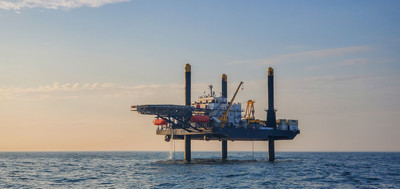
Lift boats are self-propelled, elevating vessels used in support of various offshore exploration and construction activities. These vessels have the capability of lifting their hull clear of the water on legs that provide a stable platform for coring activities. They are limited to shallow waters close to shore. A seafloor survey is necessary to ensure features are known before choosing a final location and occupying a site. These types of vessels have been used for scientific ocean drilling along the eastern coast of the United States (Expeditions 313 and 501) and to drill the Chixulub impact crater (Expedition 364). Mounted land-based mining rigs can be used for coring.
- Water depth range: 40 to 80 m
- Total depth: 2600 m of drill string for standard core diameters
- Coring systems: typically third-party mining rigs mounted to the deck utilizing rotary and piston coring systems
- Coring rates: estimated at 35 m/day
- Environments: limited to coastal or shelf environments
- Deck space: large open deck to accommodate equipment and supplies
Geotechnical Vessels
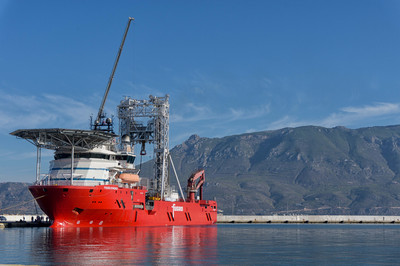
Geotechnical vessels are specialized ships equipped for marine based surveys and coring of the seabed. The vessels are dynamically positioned and can operate in water depths from approximately 25 to 2500 m. Many are equipped with drilling rigs and shipboard labs. Heave compensation limitations may restrict coring operations in harsh environments (heave greater than 1.5 to 2 meters). Geotechnical vessels were utilized during Integrated Ocean Drilling Program Expeditions 302, 310, 325, and 347 and International Ocean Discovery Program Expeditions 381 and 389.
- Water depth: 25 to 2500 m
- Total depth: up to 3000 m long drill string
- Coring systems: third-party conventional coring tools or mining equipment
- Coring rates: estimated at 50–70 m/day
- Environments: can operate into abyssal depths
- Deck space: may be limited for mobile containers
Drill Ships and Well Intervention Vessels
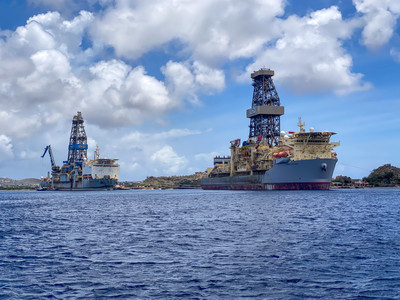
Drill ships and well intervention vessels are designed for deepwater and ultra-deepwater drilling. These vessels are necessary for deep water operations. They can operate in waters up to ~2500 m using a riser and up to approximately 6000 m without a riser, depending on the drill string used. These vessels are significantly larger than the other types, with a more stable drilling platform. Drill ships may need modification for continuous wireline coring. These vessels can operate in harsh environments with significant (up to 4 m +) heave. Laboratory space, space for mobile laboratories, and core storage may be limited. Price may be prohibitive and vessel availability limited.
- Water Depth: Typically >100 m, maximum determined by total drill string length
- Total depth: up to 6500 m drill string
- Coring systems: Commercial drill ships will come equipped with drill pipe handling systems (i.e., derrick, drawworks, racker, etc.), and they may not always have coring systems with compatible drill pipes. However, coring systems/pipes are available for lease from third-party providers.
- Coring rates: estimated at 50–70 m/day
- Environments: can operate in the deepest water depths and in harsh environments, although would likely need escort/support vessel(s) in icy climes.
- Deck space: may be limited