


October 7, 2026
New study identifies sediment origins to improve climate record
Integrating geological and genomic data reveals how Santorini's hydrothermal systems changed after major eruptions.

A new analysis of sediments from the Santorini Caldera combines geological and genomic data to reveal how hydrothermal conditions evolved with Santorini’s past volcanic activity.
The exchange of heat and materials between the Earth’s interior and surface around marine volcanoes creates unique and highly toxic environments. These environments are enriched with trace metals, such as mercury and arsenic, as well as microbes that have evolved to tolerate their presence.
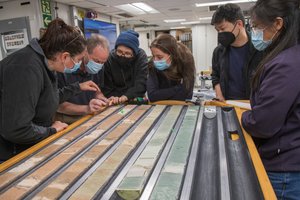
Sediment cores retrieved during Expedition 398 to the famous Santorini Caldera provide insights into how these geological systems have changed over hundreds to thousands of years. Using both metal and microbial signatures, scientists assessed past hydrothermal conditions in the Santorini caldera.
Their analysis reveals distinct and previously unknown hydrothermal trends before and after large eruptions, and shows how microbes adapted to thrive in this toxic cocktail.
The study is in press with Nature Communications, which has provided early access to findings during the review process.
October 7, 2026
New study identifies sediment origins to improve climate record
September 22, 2026
The role of granite in mantle processes
September 3, 2026
Exploring life in the rocky subseafloor