


Navigate Sections
Applications opening soon
Accepting applications
Applications closed
Thawing of permafrost and cryosphere-associated gas hydrates by Arctic warming (THAW)
Applications closed on December 15, 2026.
- Date
- February 24–27, 2027
- Applications Open
- November 23, 2026
- Deadline to Apply
- December 15, 2026
- Closed On
- December 15, 2026
- Location
- Yellowknife, Canada
- Organizers
- Michael Riedel (GEOMAR, Helmholtz Centre for Ocean Research Kiel), Judith Schicks (GFZ Helmholtz Centre for Geosciences), Ewa Burwicz-Galerne (University of Bremen), Timothy Collett (U.S. Geological Survey at Denver), Ann Cook (Ohio State University)
Purpose and Scope
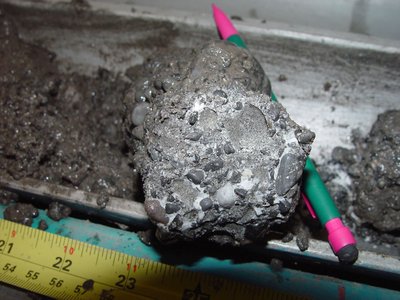
This workshop addresses gas hydrate and permafrost-related questions under current and future global warming scenarios with a regional emphasis on the Canadian Mackenzie-Beaufort region. Vast regions of the Arctic margins were subaerially exposed or ice-covered during glacial times, leading to wide areas of onshore and offshore permafrost. This permafrost hosts methane as free gas, dissolved in water and as gas hydrate. Global warming alters pressure–temperature conditions and endangers the stability of permafrost and gas hydrates, increasing the risk of methane release into the atmosphere and further amplifying climate change. The response of terrestrial permafrost associated gas hydrate systems differs from those along the offshore continental shelf where warming bottom water temperatures are expected to have a disproportionate impact on the stability of the permafrost and gas hydrate system. Thus, a land-to-sea scientific drilling transect is proposed to understand the geologic factors controlling the occurrence and stability of permafrost associated gas hydrate systems across the Canadian Mackenzie-Beaufort margin.
We aim to obtain high-quality core-samples, well logs and in-situ measurements using scientific drilling. During the workshop, we will define locations and depths of boreholes along a land to sea transect, as well as the technologies to be deployed, addressing the following scientific research questions:
What is the extent and saturation of permafrost and gas hydrate along the drilling transect?
What controls the distribution of permafrost and gas hydrate?
What types of greenhouse gases are present?
What geochemical and microbiological processes contribute to the presence of these greenhouse gases?
Participation
Led by an international group of scientists, this workshop is co-sponsored by SODCO and the International Continental Drilling Project (ICDP). This call is focused on U.S.-based scientists seeking support from SODCO.
We welcome applications from U.S.-based scientists with an interest or experience in gas hydrate, permafrost, and/or Arctic science. Scientific specialties of interest include but are not limited to 1) organic/inorganic geochemistry, 2) geomicrobiology, 3) sediment physical and geo-mechanical properties, 4) in situ measurements, pressure coring, well logging and monitoring, 5) Arctic systems and geospatial modeling, and 6) Arctic paleoclimatology.
We particularly encourage early career applications, which include PhD candidates, postdoctoral scientists, and early career faculty and research scientists.
Funding for travel, housing, meals, and incidentals will be provided for all U.S. SODCO participants.
If you are interested in participating in this workshop as a U.S. SODCO participant, please email the application materials listed below to Ann Cook by December 15, 2026.
Application Materials:
A letter expressing your interest in the workshop, which includes a summary of your expertise and what you intend to contribute to the workshop. This letter should not exceed 2 pages.
A 2-page CV or Biosketch.
(PhD Candidates Only) A brief reference letter from your advisor that supports your participation in the workshop.
Workshop Contact
Ann Cook, cook.1129@osu.edu.